 Home

AI-Powered Synthetic Research
A research lab that let brands test product concepts against Digital Twins in minutes.
- Role
- Lead designer
- Timeline
- About four months
- Year
- 2025
- Team
- 6 engineers, 2 PMs, 1 designer
A business losing deals
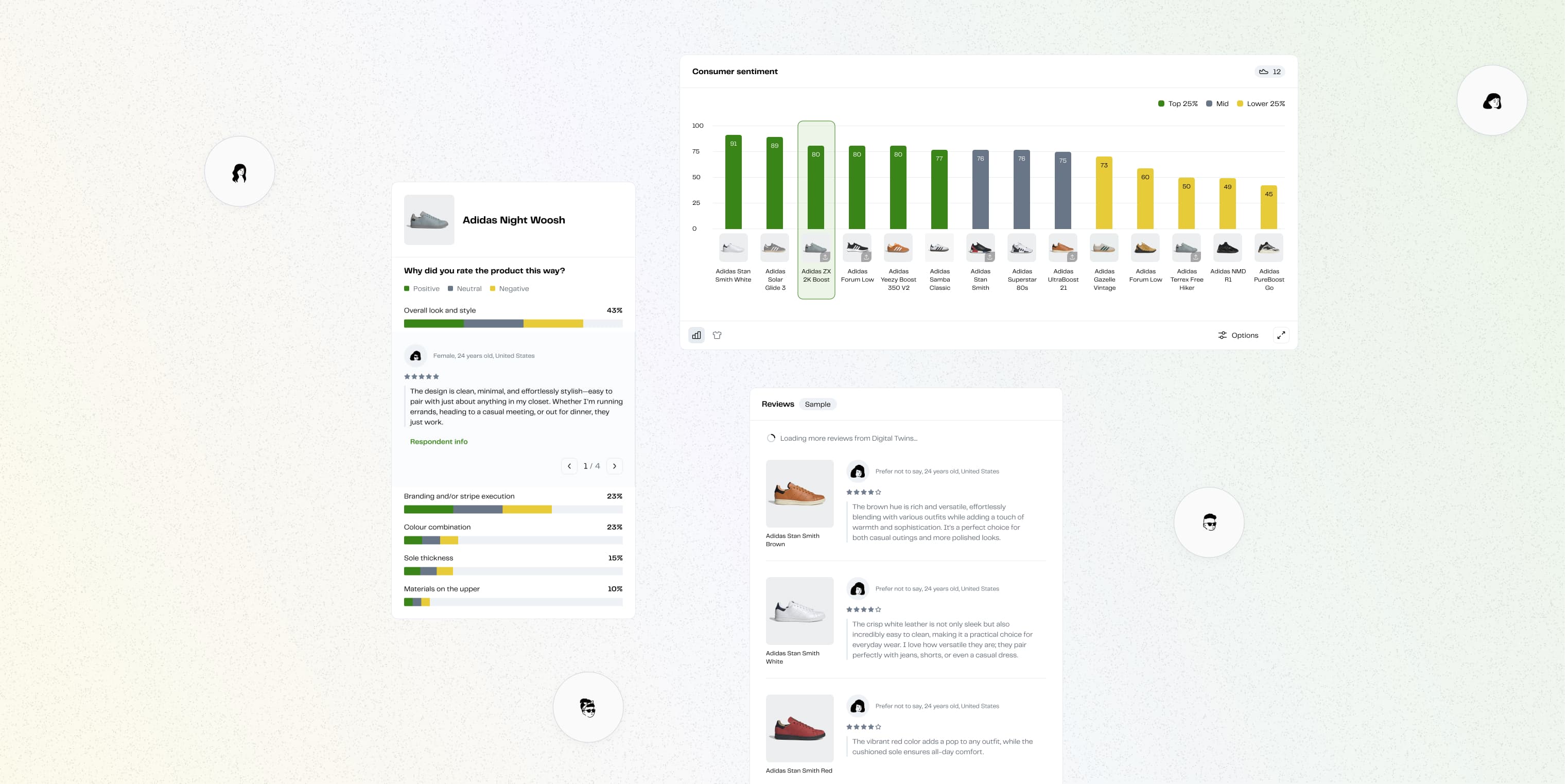
MakerSights helps retail brands make product decisions with consumer data. By early 2025, the business was losing deals. Tariffs and budget cuts had brands churning or dropping annual contracts. We had Digital Twins, models trained on real consumer data, and three six-week cycles to turn them into a product brands would pay for.
Getting brands to trust the output
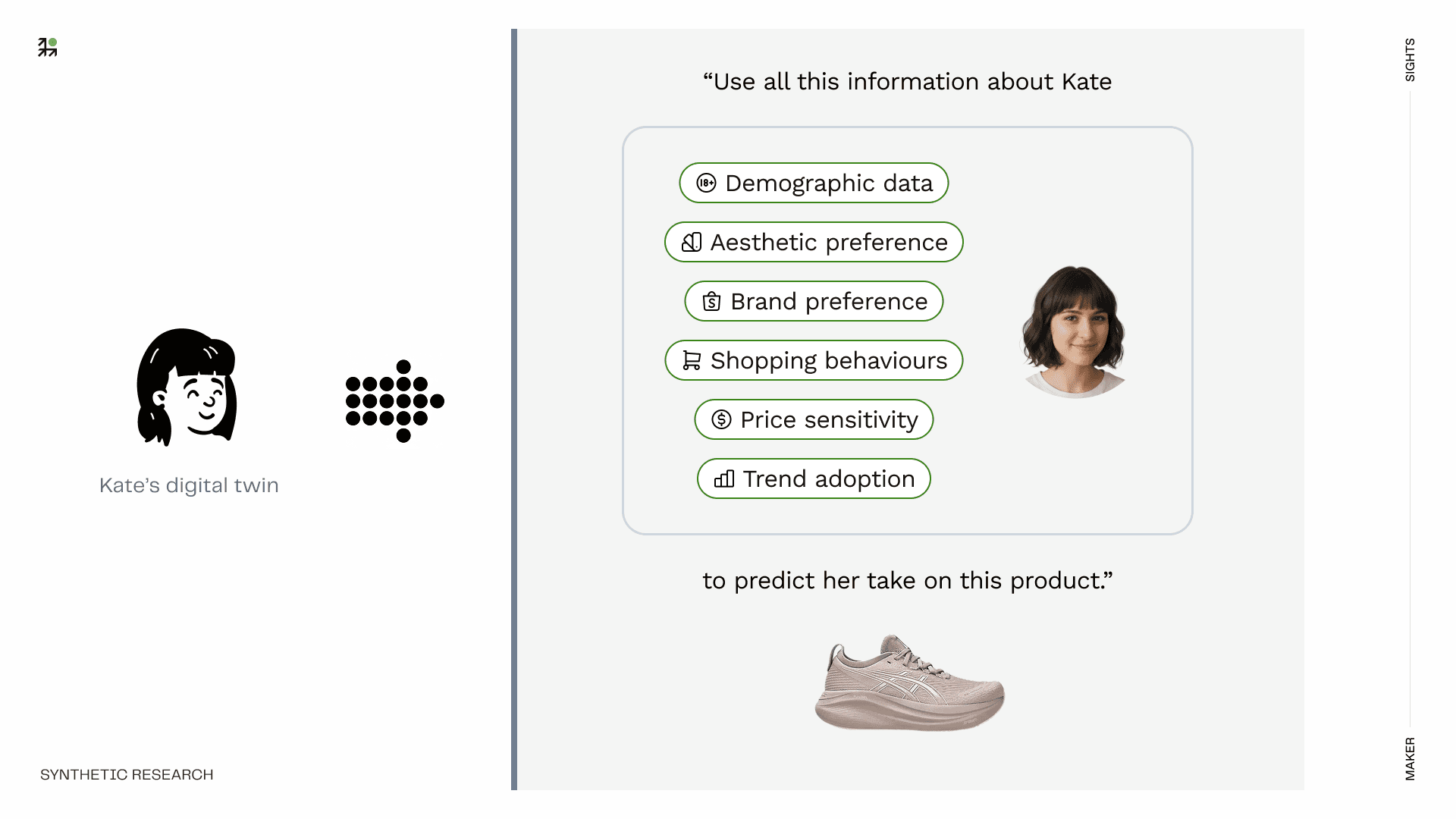
Designers and merchants both wanted answers sooner, and the Twins could give them that. In every demo, a second question came right after the excitement: could they show this to their exec, and did it reflect their real consumer?
Working next to data science
I led design across all three cycles, with one other designer, six engineers and two PMs. I shaped each cycle’s brief, ran concept tests with Under Armour, Bonobos, Ralph Lauren and Lululemon, and met the data science team every week so model limits showed up in design early.
MakerLabs
Designing the wait
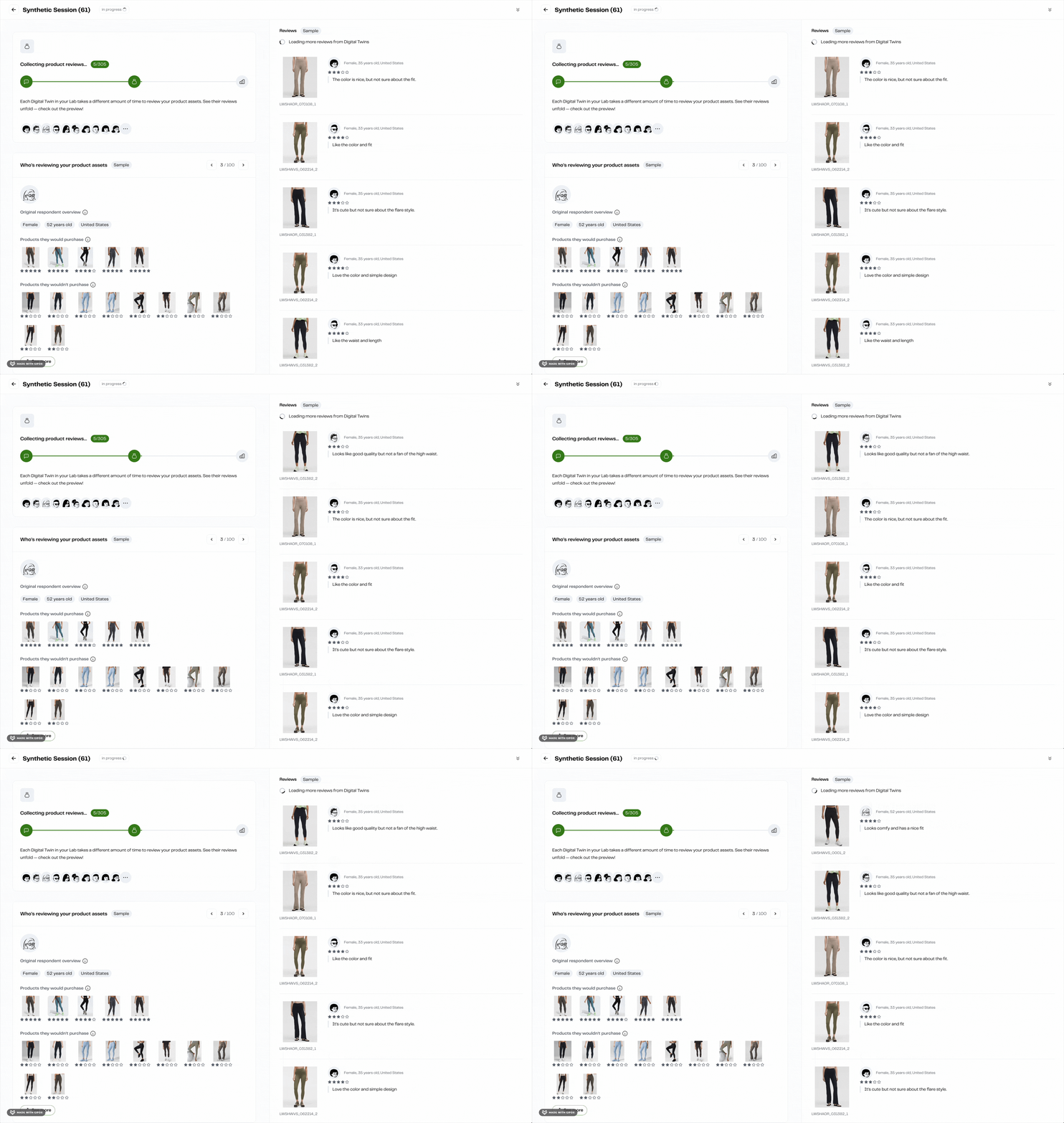
After a brand uploaded its products, the Twins took minutes to review them. My first pass at that wait was a progress bar with status steps, accurate and forgettable. Four passes later, it showed live reviews next to the profiles of who was writing them.
Results brands already knew how to read
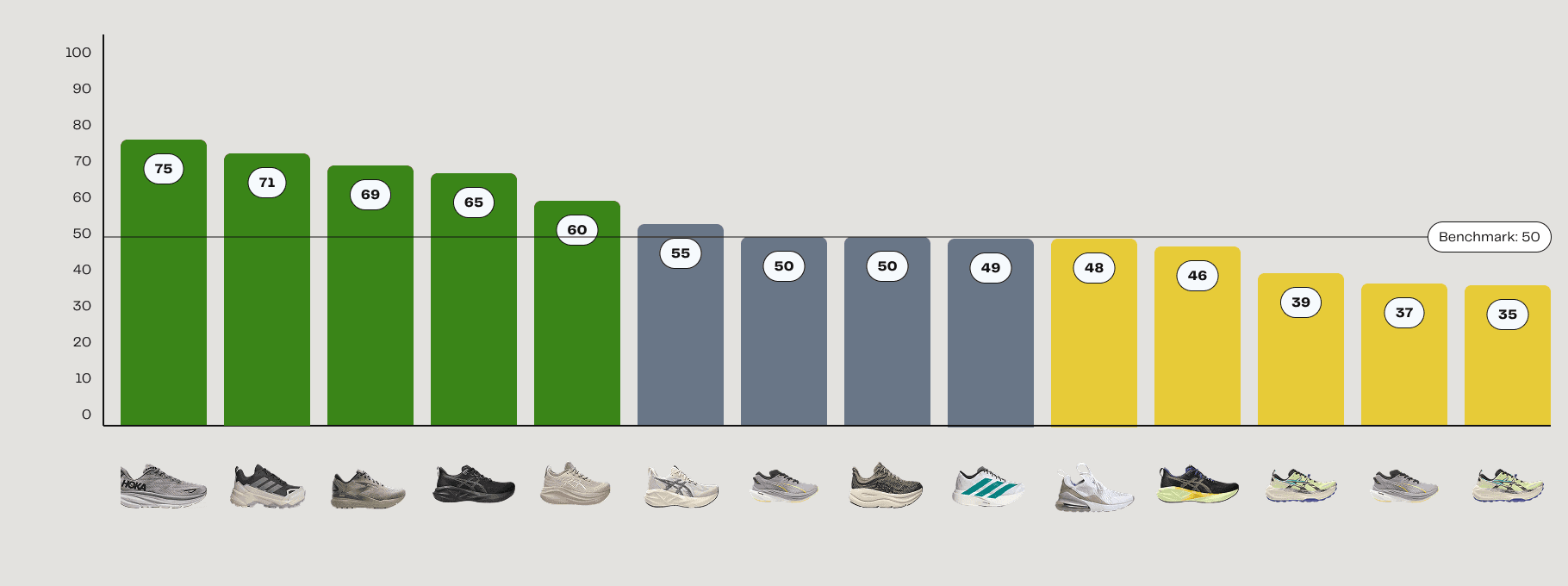
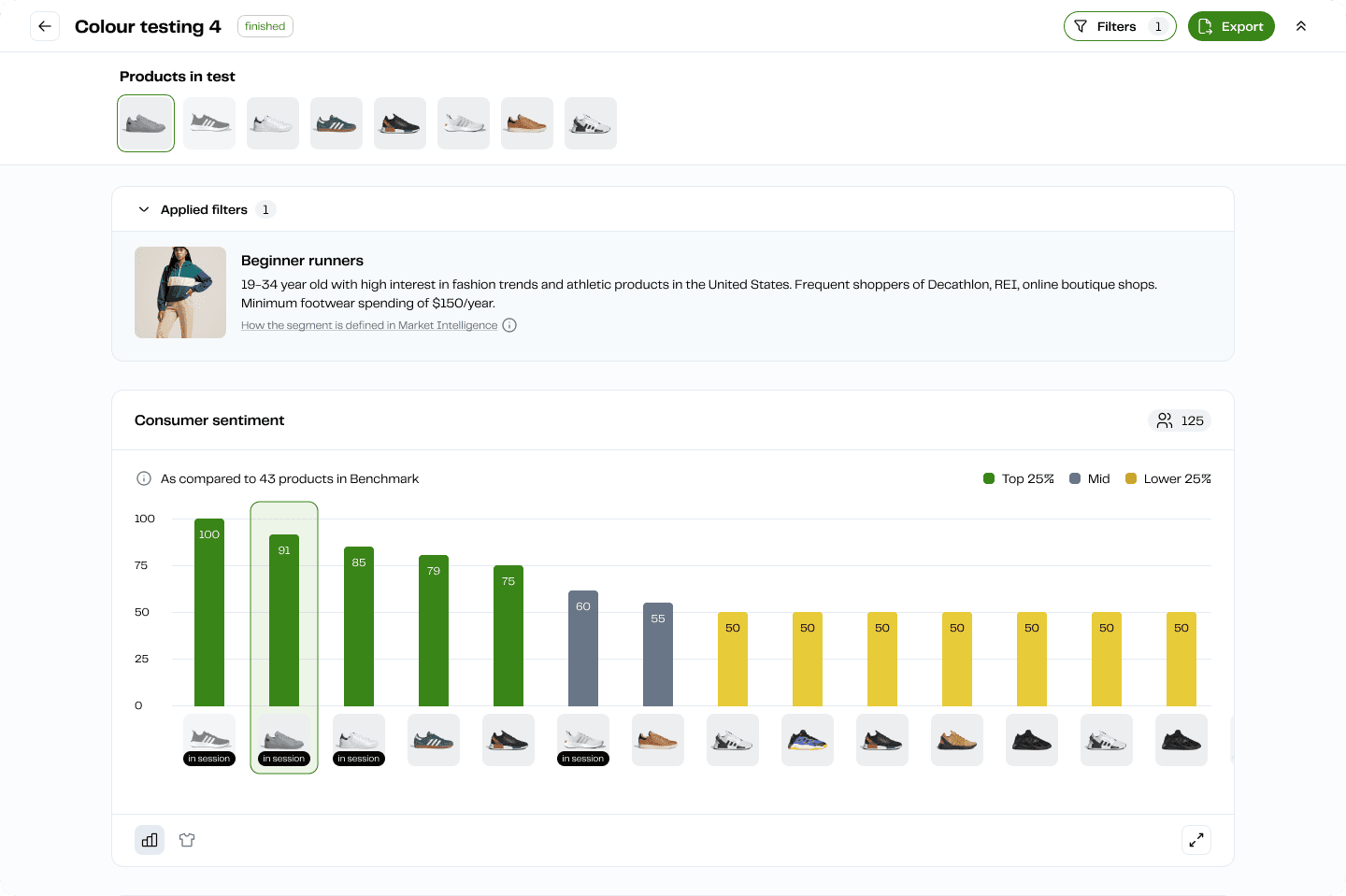
The models were new, so I kept results close to traditional research: a sentiment score for every product against a benchmark, with filters for one segment at a time.
Showing who is behind each answer
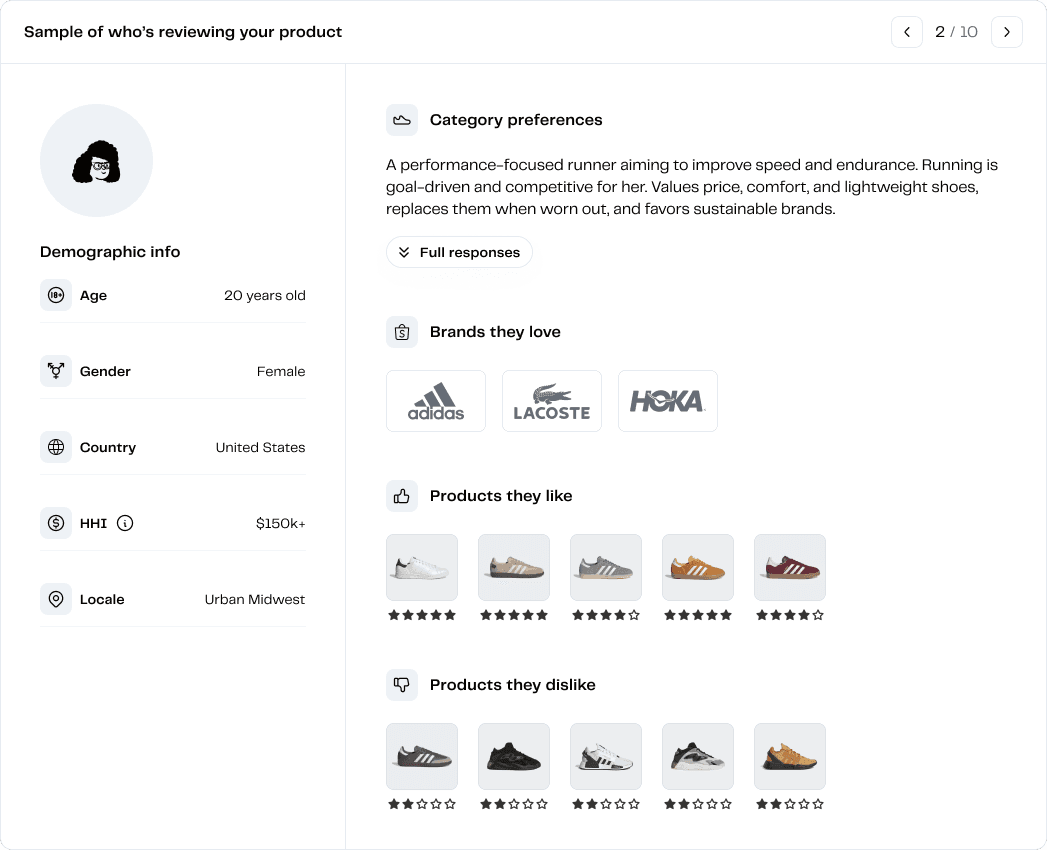
After launch, brands still wanted to see under the hood before sharing a result with their leadership. Each respondent card became a full Twin profile, traced back to a real person who answered a survey.
Choosing which products to compare
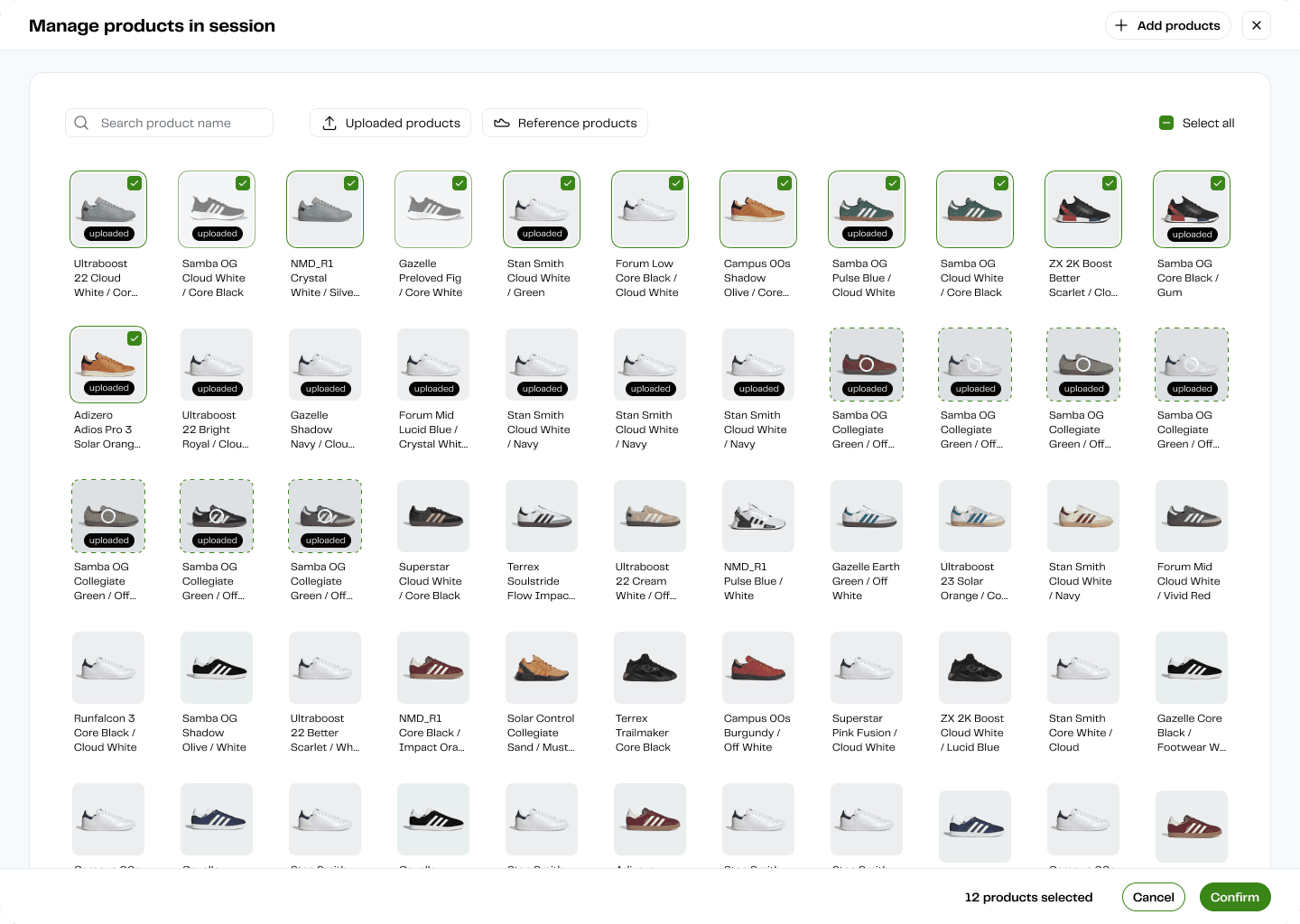
A session could hold a lot of products, so people needed a way to choose what was in view. I added a view for picking which products show in the results and pulling in reference products to compare against.
Pilot brands and reopened accounts
The 5/5 came from Bonobos, Dearfoams, Ralph Lauren and Under Armour. Macy’s, quiet for three years, reached out twice in two weeks, and J.Crew and Madewell, both churned, started coordinating a meeting together.
In an early sales demo, the part people leaned in for was the loading screen. Twins were reviewing a brand’s product live, and anyone in the room could click in to see who was reviewing. After the demo our co-founder messaged the team: “holy shit… we simply can’t deny the power of the wow moments.”
I’d want my merchants to use it.
I’ll loop my team in.
What I’d work on next
You can read a Twin’s reasoning but can’t change it yet, and some brands still wanted us in the room. Next I want to work more on bias and reliability in what the models produce, and on giving people control over what they get back.