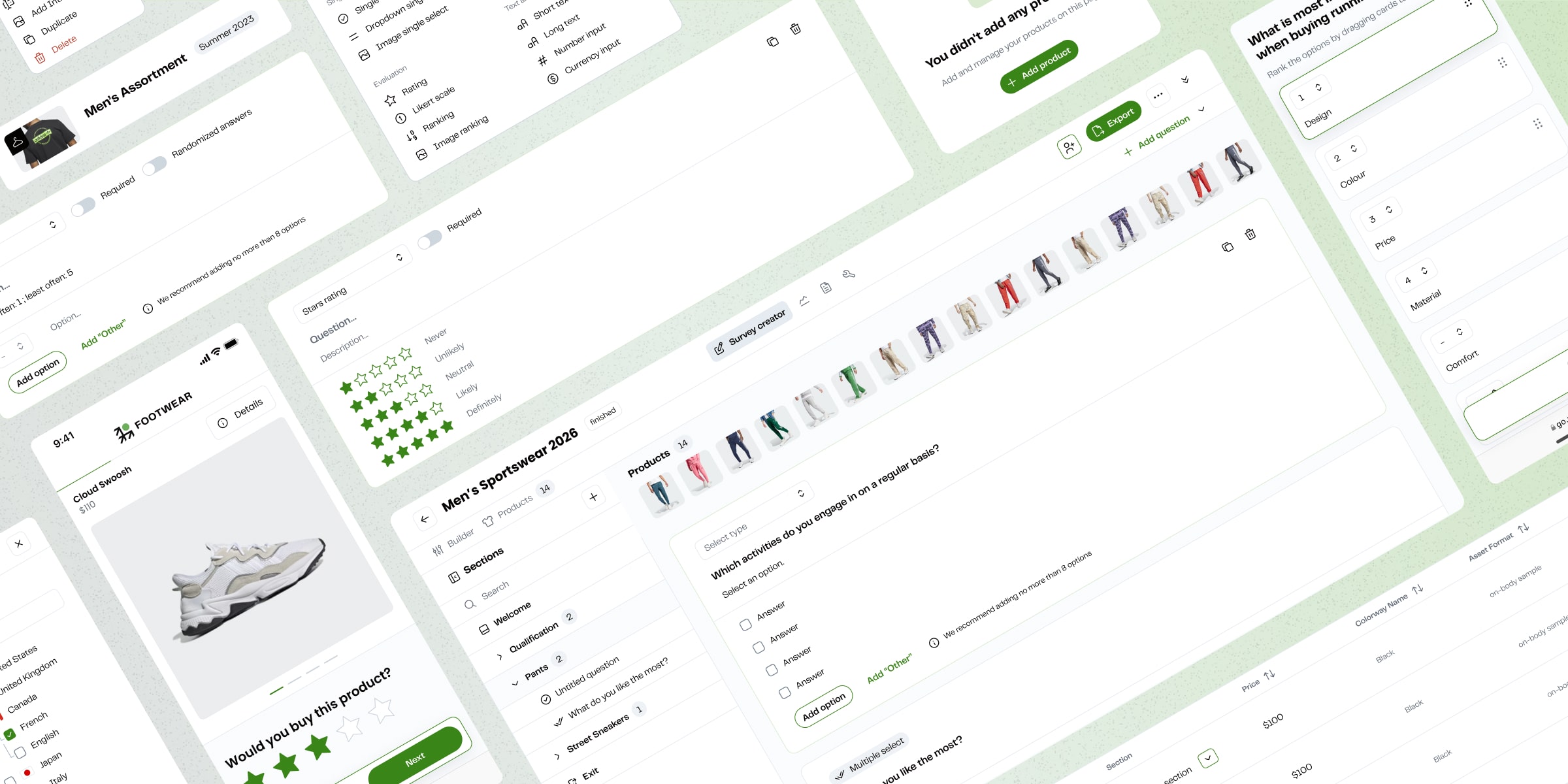
MakerSights helps retail brands make faster product decisions using consumer data. By early 2025, the business was losing deals. Tariffs and budget cuts were squeezing insights teams across retail, and brands were churning or moving to pay-as-you-go because they couldn't commit to annual contracts.
At the same time, a real opportunity was forming. Foundational models were powerful enough to simulate consumer behavior at scale, and MakerSights had already built Digital Twin models trained on real consumer data. The question was whether a product could be built around them that brands would actually trust.
Three goals: wow brand teams with speed, build enough trust for adoption, and give go-to-market something pitch-able, oriented toward additional $1M ARR.
We have developed custom AI models to generate Digital Twins of consumer groups in various retail categories, such as running, legging, graphic tees, and can be custom made for brands target consumer groups. Digital Twins simulate consumer sentiment & purchase intent with extremely high accuracy, through product ratings and feedback.
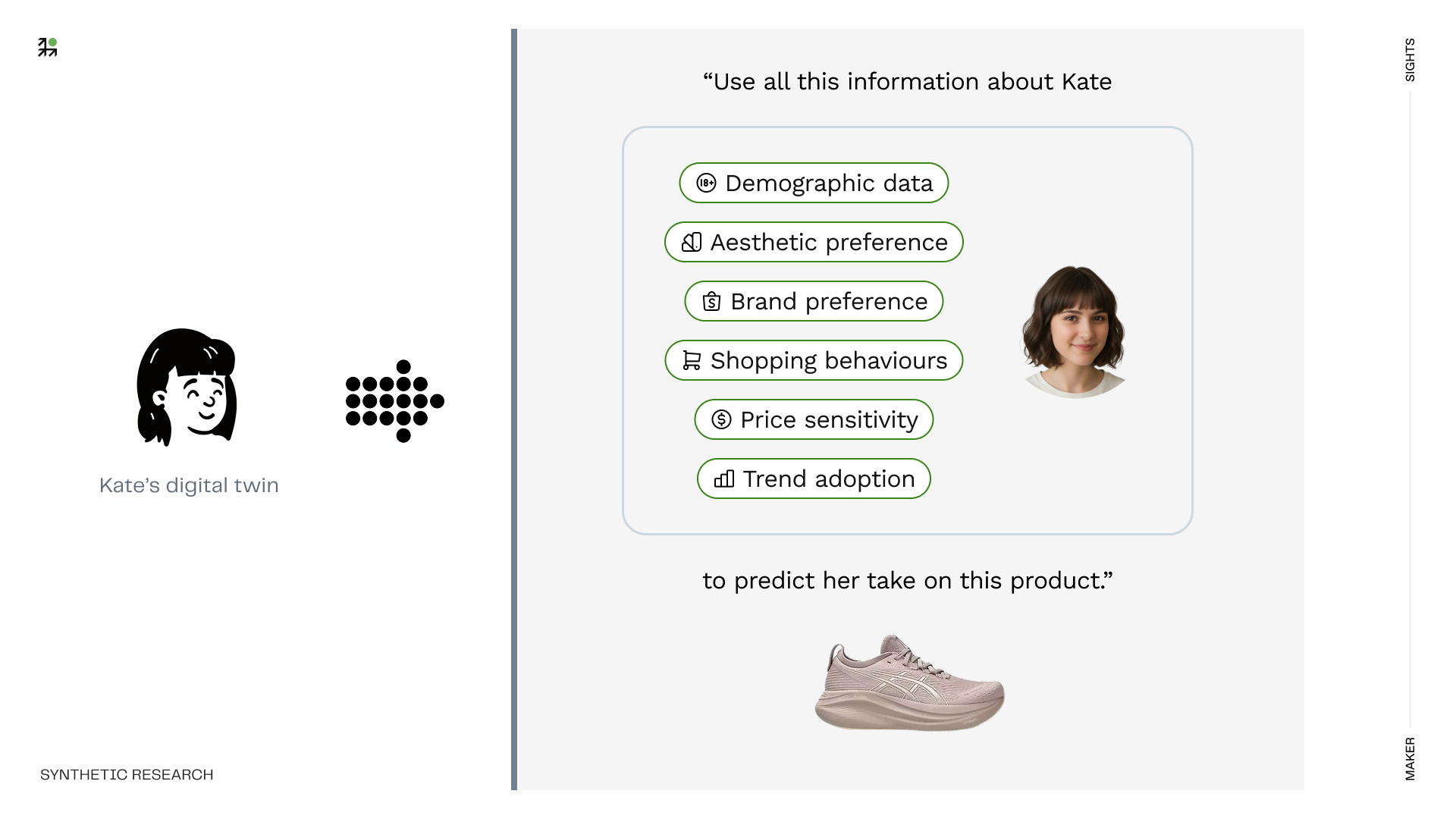
"Digital Twins" is not a new concept, but synthetic research is a relatively new paradigm that our customers needed guidance in exploring. Brands got excited by synthetic data fast, then got skeptical. Could they show the results to their exec? Did it reflect their actual target consumer? Speed without credibility meant it would stay a demo asset.
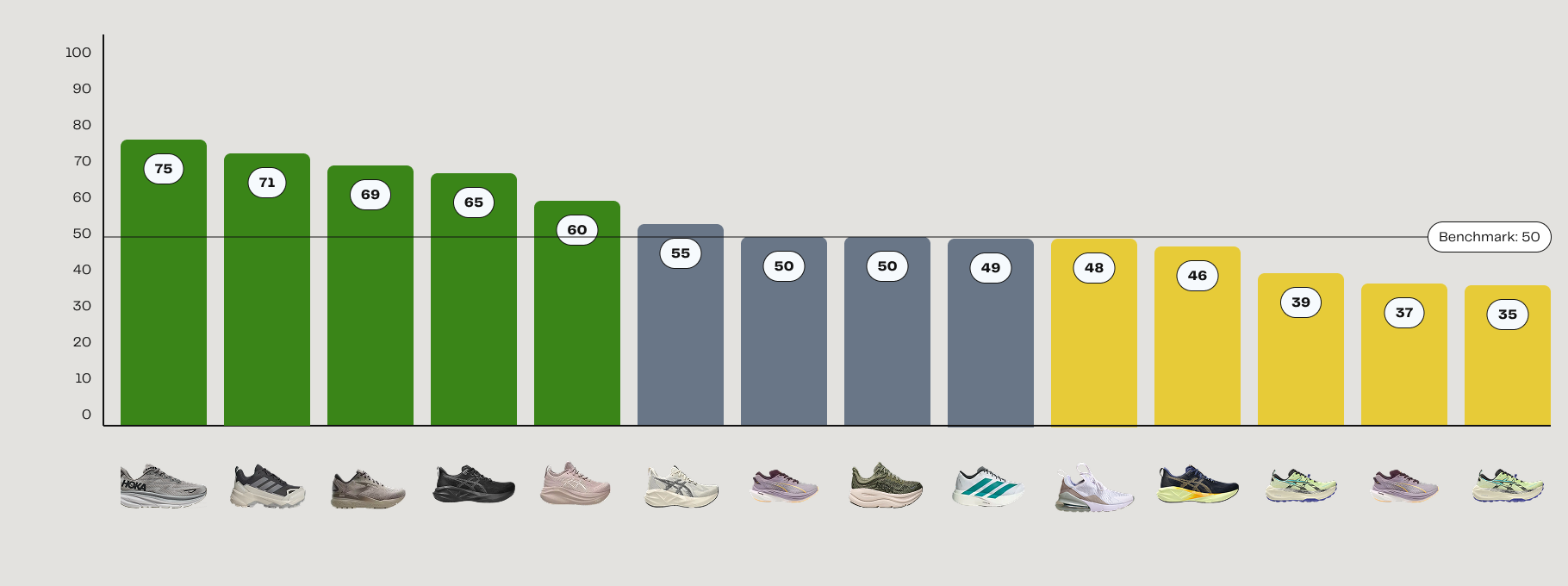
We needed table-stakes features similar to traditional research while navigating technical unknowns and evolving models. We couldn't wait for perfect. We had to move with incomplete information and be honest about what we knew and didn't know yet.
I led end-to-end design across three 6-week ShapeUp cycles, from concept through alpha launch. Two designers (I was the lead), six engineers, two PMs. About four months total.
My scope covered product shaping, research, interaction design, data visualization, and the design system. I ran brand interviews with Under Armour, Bonobos, Ralph Lauren, and Lululemon, and kept sales feedback flowing into the design process as a continuous signal.
A lot of what mattered happened outside Figma. I had weekly syncs with the data science team and read their documentation before model limitations became design problems.
MakerLabs is a session-based research lab. Brands upload products, watch Digital Twins respond in real time, and explore results through transparent, traceable data. The product promised speed that felt like magic. The design's job was to make that speed feel trustworthy.
We introduced a simple Lab view as a landing page for each Lab. The product upload zone was designed simply to minize friction, so our brands can easily upload their products and get started.
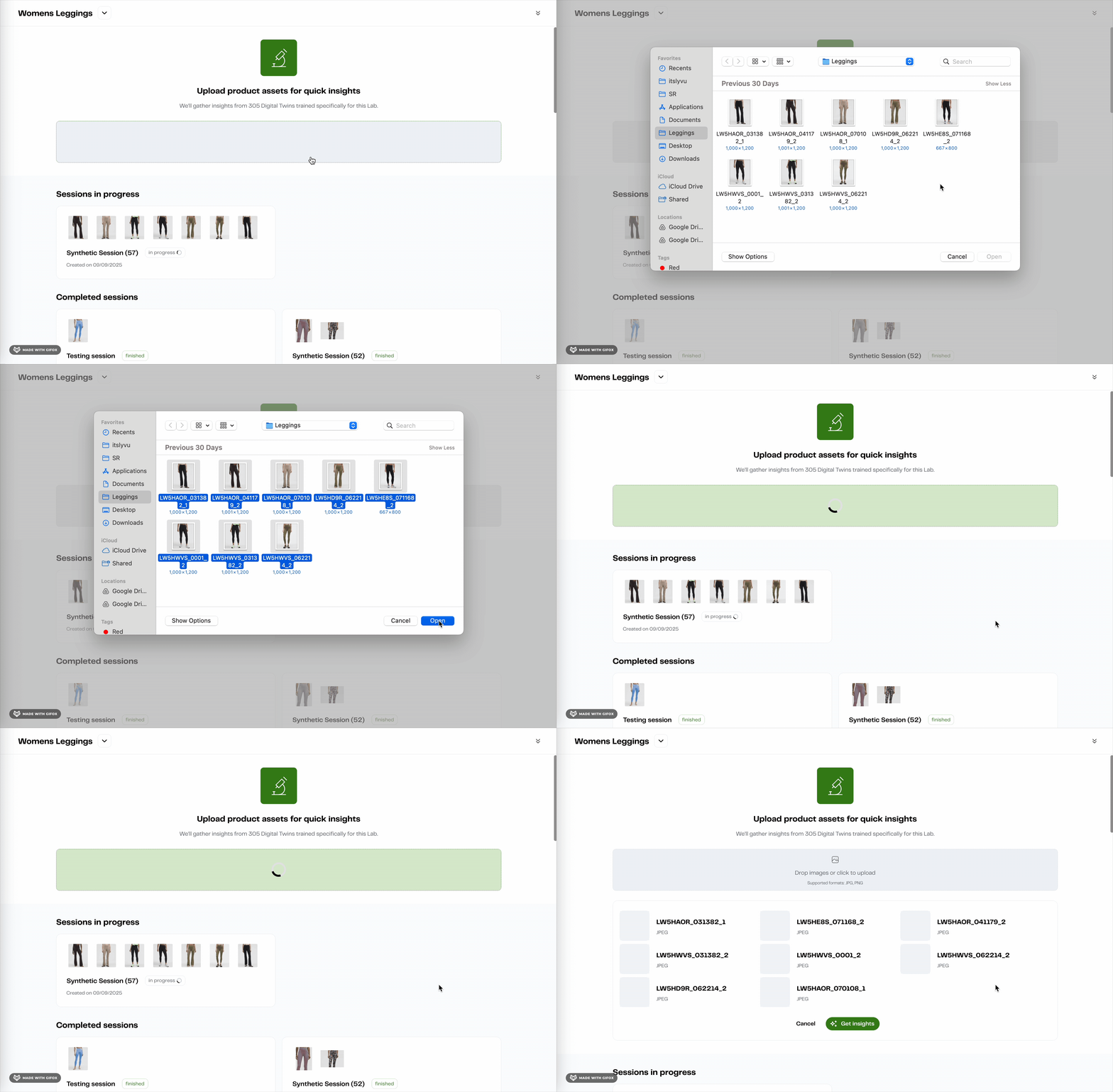
Picture a designer eager to hear what consumers think. While waiting for reviews, they browse Twin profiles to understand who's reviewing their products. As responses come in, live results surface in real time. This loading state became one of our most memorable moments in sales demos — our co-founder noted that people's eyes lit up watching Twin responses appear.
.gif)
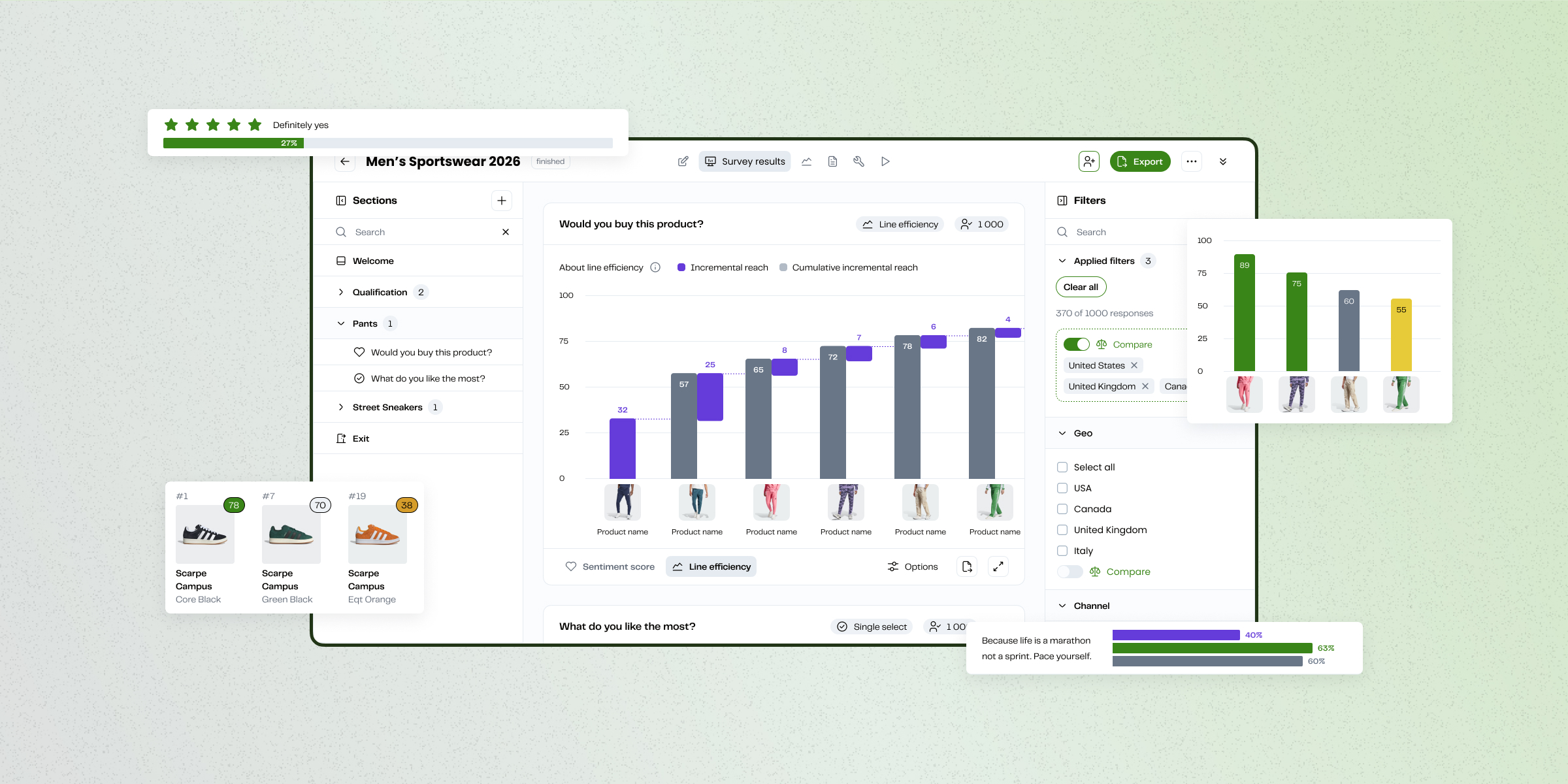
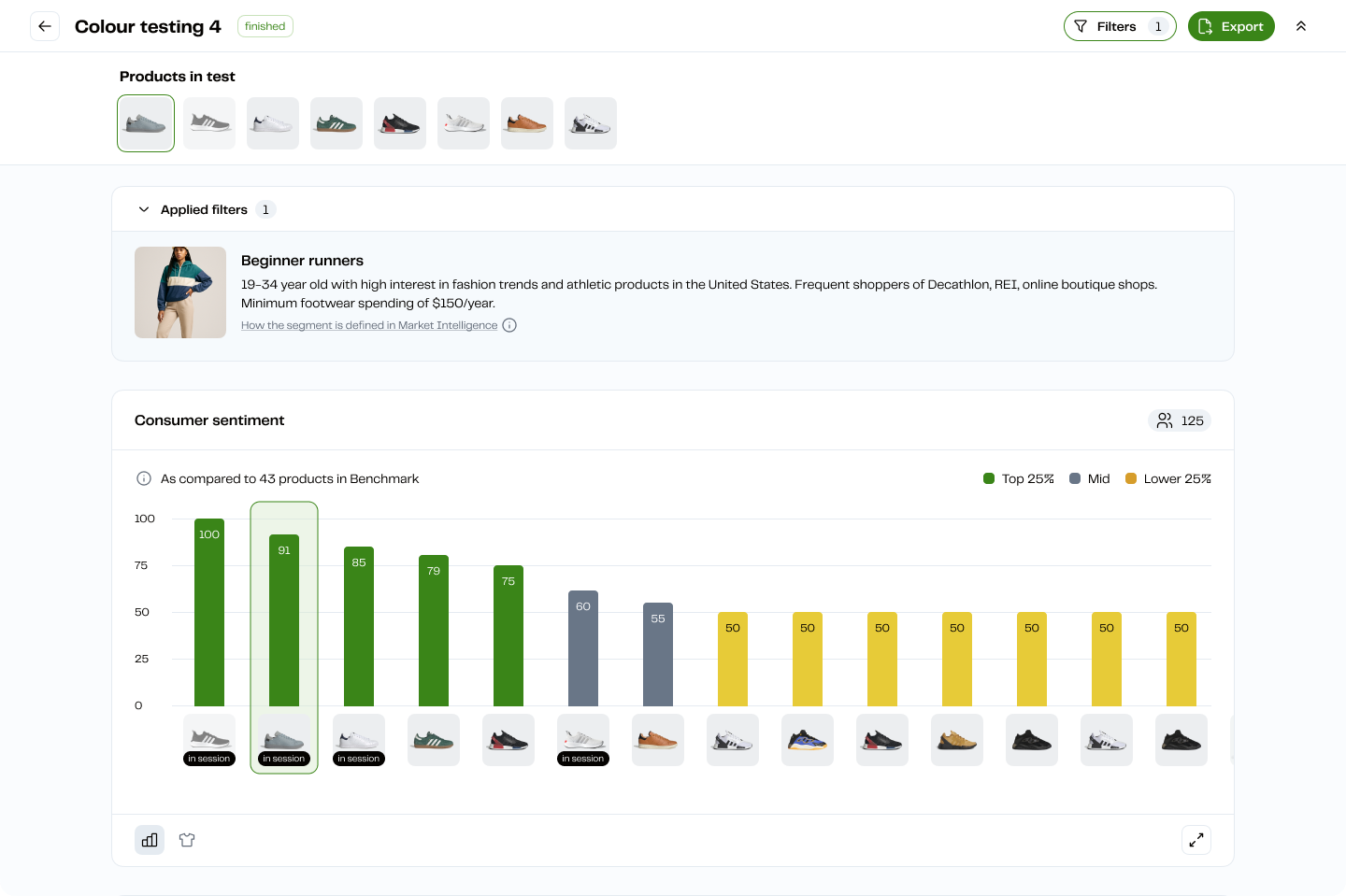
With the aim to deliver table stake features but keep the experience simple, the Sentiment Score chart takes central stage, pairing with ability to segment the results by consumer groups.
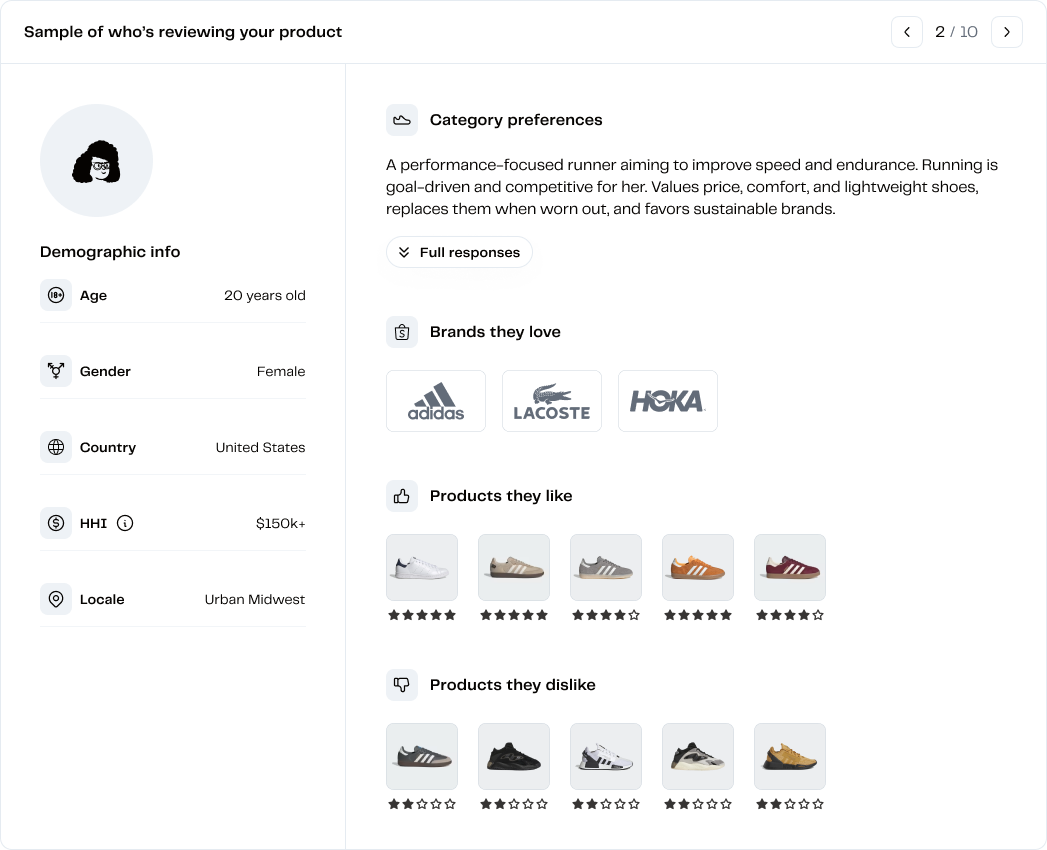
Users can now trace the Twins' responses through their reasoning logic, and seeing the human counterpart that's behind the Twin. Nothing is in a black box, the data provenance is clear and confidence in the synthetic results is higher.
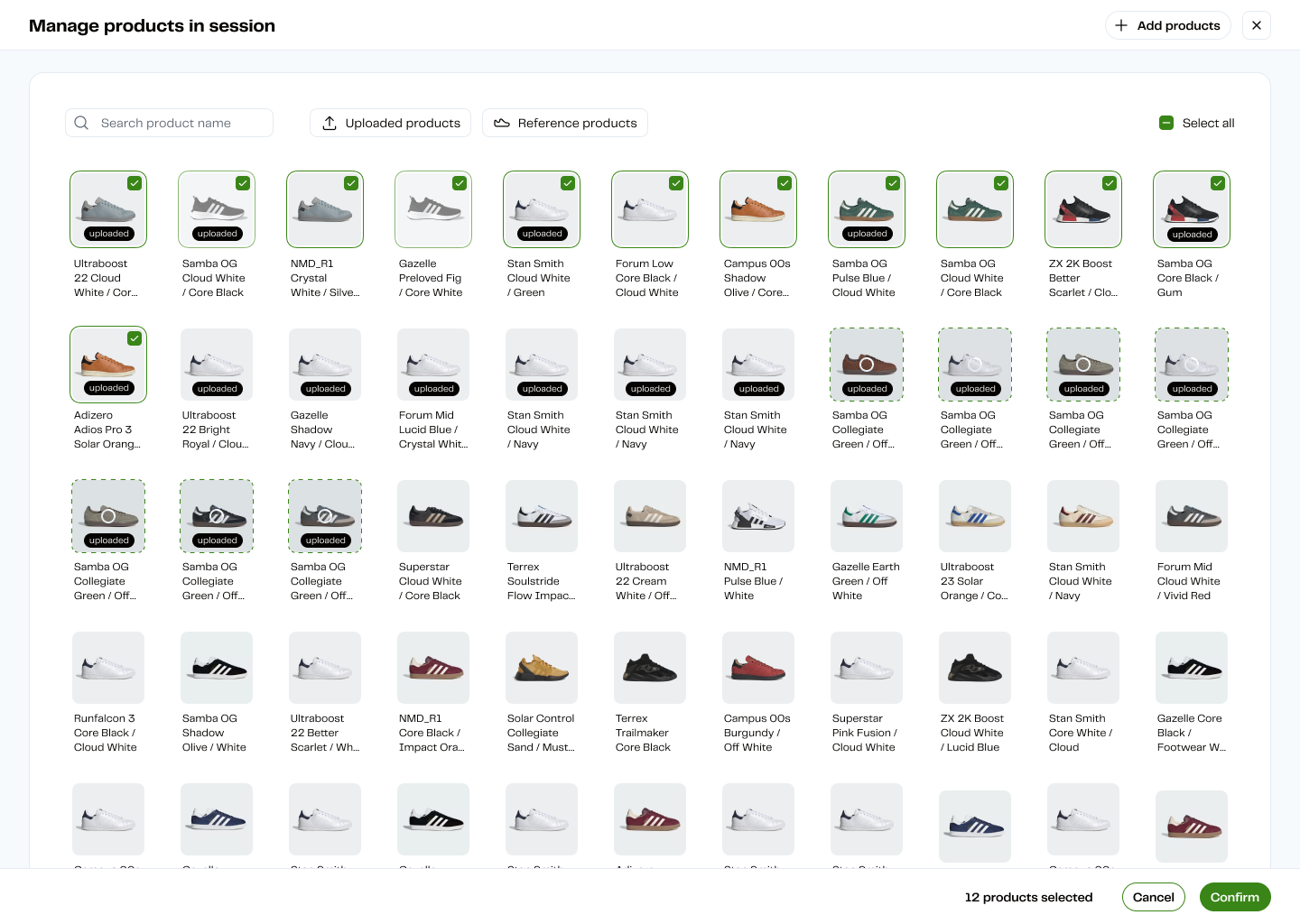
Users now can easily manage products in view, pull in other products to help them compare and make decisions.
Working at a fast-paced startup is a challenging and rewarding journey: adapting to a new working method while figuring out a 0-1 product with new technology at the same time. The key is to constantly adapt, learn, and get comfortable with uncertainty. We started with a Knowledge Base product before pivoting to Synthetic Research, and I'm proud of how far we've come in just a few months.
There's so much more to monitor, fine-tune, and experiment with when it comes to AI outputs. Going forward, I want to pay attention to bias and reliability, continue to secure user trust through transparency and feedback loops, and give users control to shape the outputs they want.
I learned a lot through partnering deeply with Data Science—weekly syncs, reading their documentation, understanding the technology we were working with. I invested in AI literacy by taking "Becoming an AI Designer" course on Maven to be more empowered to take on the challenge.
I have used ChatGPT and Perplexity extensively for shaping projects and research, Lovable and Claude Code / Cursor to design and build with real data. It's pushed me to learn more technical skills and become a more complete product builder.
Senior Product Designer with a business and marketing background. Driving vision through validated insights, fast collaboration, and prototyping with care.


.png)